 Canada’s first CE0 Prime Minister has confounded First Nations, offended environmentalists, bamboozled some provinces, and called the bluff of the Official Opposition, but he may have found a way to block the path of Western separatists and move the country forward on his projects of “national importance.” PM Carney appears to have landed on a compromise solution, albeit a very costly one for the Canadian government and taxpayers, to allow Alberta to transport its bitumen to the Pacific coast. The answer may well be to increase the capacity by about 360,000 barrels per day of the existing Trans-Mountain pipeline bought and paid for by the Liberal government of Justin Trudeau. Already the Trans-Mountain project is costing $34 billion. The NDP government of Premier David Eby of British Columbia appears to view this compromise position as acceptable, and Premier Danielle Smith of Alberta remains the big winner after proudly signing an MOU on moving her province’s oil to the Pacific with P.M. Carney. Enough First Nations view the expanded existing pipeline as acceptable, the Carney government is no longer insisting on a Northern British Columbia coastal pipeline route, something unacceptable to First Nations on that Northern coast. Unless a private sector owner for the expanded pipeline comes forward, which seems unlikely at this point, the government of Canada will take a substantial financial hit to expand the southern route. Gaagwiis, the president of the Haida Nation on the Northern coast has said he cannot support a project that could pose "a significant risk to our way of being." The proposed Northern pipeline could result in more tankers in the Hecate Strait near that nation's territory on Haida Gwai. "We do want to work together and be partners and find areas of common interest and alignment. Unfortunately, the oil pipeline is not one of those areas," Gaagwiis said. The Canada-Alberta MOU brought an important casualty with the resignation of MP Steven Guilbeault from the Carney cabinet, while saying that he would stay on as a member of the government caucus.
"Despite this difficult economic context, I remain one of those for whom environmental issues must remain front and centre,” said Guilbeault who was known for his activism as a climate advocate long before getting into politics. He was a member of Greenpeace, and famous for scaling the outside of the CN Tower in Toronto. Inside the Trudeau government he was a strong supporter of the Consumer Carbon tax, controversial across many parts of the country for increasing the price of fuel at the pump but applauded by people concerned about climate change. Nonetheless, by staying in the Liberal caucus after his cabinet resignation, Guilbeault avoided a by-election which could have hurt the Carney government in in what at that point was its very tight minority situation. Natural Resources Minister Tim Hodgson, emerging as minister with a human face, helped soften the blow of losing Guilbeault from the government by speaking warmly of the environmental advocate and making clear that Guilbeault is an important colleague. Of course, Poilievre’s standing has again been further hurt by the defection to the Liberals of Ontario MP Michael Ma, putting the Liberals just one MP short of majority status. Ma’s move brought a celebratory mood to the Liberal caucus Christmas Party on Thursday night. But PM Carney’s status is not all wine and roses. He once again ignored the fundamental rule of dealing with First Nations in Canada, “consult first” and act in partnership with the First Peoples. The PM has also ignored another fundamental Canadian rule, not to impose as a federal initiative something which negatively impacts various provinces in that part of the country. The Danielle Smith government has in recent times attempted to cement her place on the radical right of Alberta politics. Her government has invoked the Notwithstanding Clause of the Canadian Constitution four times in recent weeks. Most recently, affecting trans rights in that province. This was seemingly an attempt to appease the right wing of her United Conservative Party. This issue really should not be a gigantic negative concern for any Canadian government, just as the former New Brunswick government of Blaine Higgs came slowly to realize. The transgender and non-binary population in Alberta (aged fifteen and older) comprises just 0.37 per cent of the total provincial population. This should keep, in perspective, the latest actions of the Smith government. The Liberal government voted against Conservative Leader Pierre Poilievre's motion Tuesday calling for a new oil pipeline to the Pacific — but ministers insisted it does not mean Ottawa has given up on the memorandum of understanding signed with Alberta last month. Poilievre's motion, which lifts some of the language included in that agreement brokered between Prime Minister Mark Carney and Alberta Premier Danielle Smith, called for MPs to back at least one pipeline that moves Alberta bitumen to the Pacific coast for export to Asia. Parliament was in an uproar in recent days with Conservative Leader of the Opposition, Pierre Poilievre, moving a motion intending to embarrass the government by pressuring back bench Liberal MP’s, particularly from British Columbia. Poilievre said this vote was designed to force Carney to "put up or shut up" and prove to Canadians he is serious about building a pipeline. The motion was defeated 196 to 139, with the Bloc, NDP and Greens all voting with the Liberals. The Conservative Leader did not even show up in the House to see his motion defeated. Poilievre had brought forward this non-binding motion to show divisions in the Liberal caucus on the issue - a divide the Opposition said put in jeopardy the possibility of a new pipeline to the Pacific. All this rhetoric collapsed with Michael Ma’s departure to the Liberals on Thursday night. Following the Prime Minister’s failure to consult with First Nations before moving on his MOU, Carney now says he will sit down soon with the Coastal First Nations – an alliance of nine First Nations diametrically opposed to a pipeline to the upper B.C. coast. Meanwhile, other Indigenous leaders, including Stephen Buffalo, the president and CEO of the Alberta-based Indian Resource Council, have said some First Nations are excited about the prospect of an expanded southern pipeline that could deliver more money and jobs. "It's been a struggle for a long time for First Nations to find different ways to create wealth for their community — to deal with all those social issues that they may have," Buffalo said. Carney had said in announcing the MOU: "We will build big, we will build fast, we will build bold, again. We used to take risks in this country. We will step up to the plate again." However, there are wounds for the government from this whole pipeline affair. Guilbeault, popular in Quebec where the environment is always an important issue, has warned that the spectre of Quebec separatism is still very much alive in that province, with the current government of Francois Legault doing very poorly in the polls and the Parti Quebecois is ascendant, and promising another referendum on independence. PM Carney appears to have taken the legs our from under Alberta separatists, but he may still fan the embers of the Quebec independence movement.
0 Comments
Leave a Reply. |

My Biography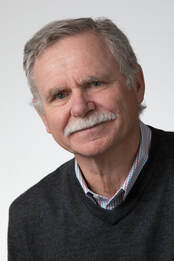
Archives
July 2026
|

|

|

|
© COPYRIGHT 2025. ALL RIGHTS RESERVED.